This website · Next.js on Vercel · Side project
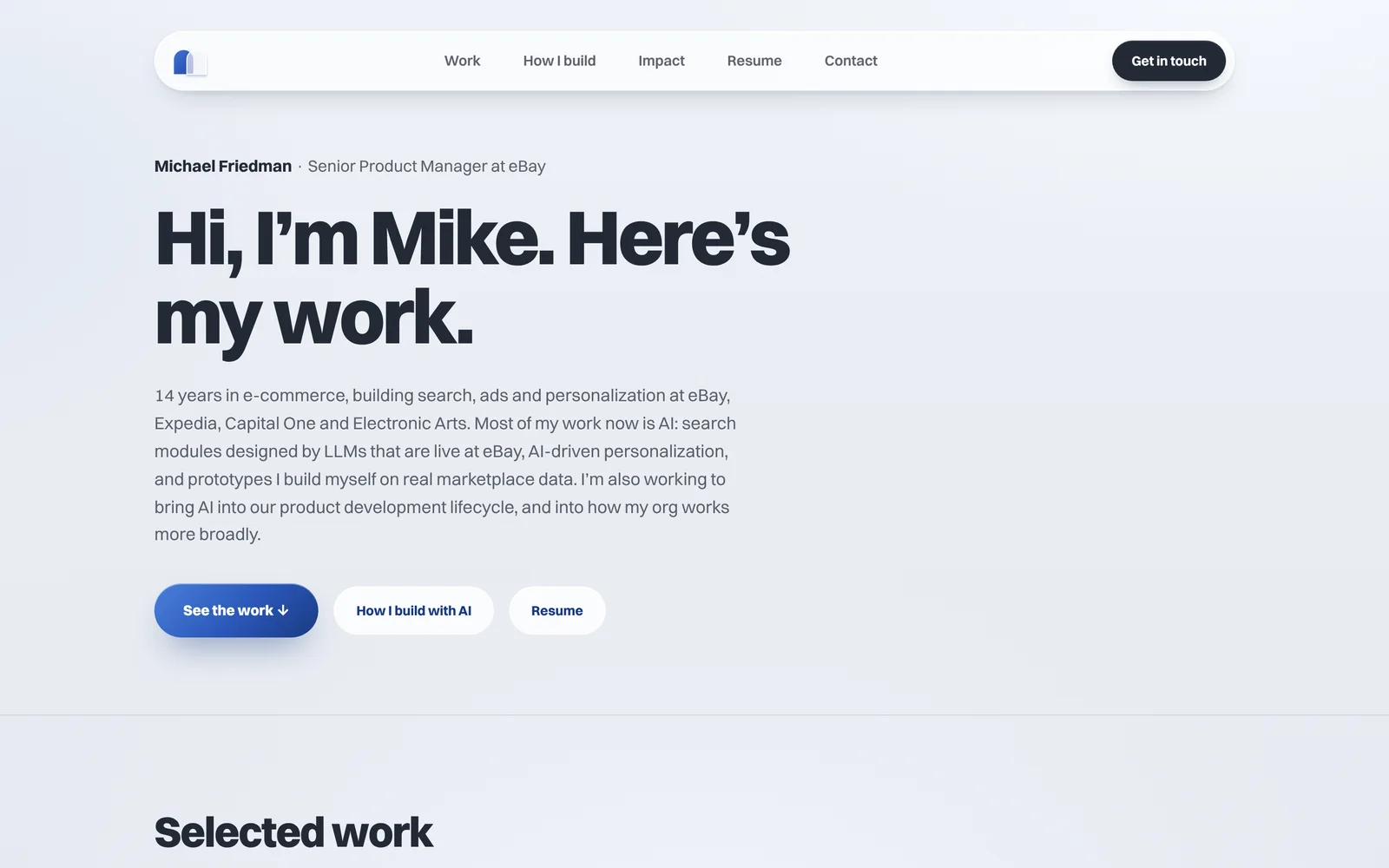
This website, built in conversation with Claude Code
A portfolio built on my business’s design system: pre-rendered, fast, and ready for live demos.
How it was built
I described what I wanted, and one Claude Code session did the work. It mocked up several directions as real pages so I could compare them, then built the one I picked. Every change came back for review with a private preview link and steps to try it on my phone. When it looked right, I said “ship it”.
The stack
Site
- Next.jsNext.js 16 App Router, every page pre-rendered to static HTML
- React
- TypeScript
- Tailwind CSSTailwind CSS 4, on design tokens shared with Safe As Houses
- VercelHosting, a private preview for every change, and cookieless visitor counts
Demos (built, not live yet)
- Anthropic APIClaude, with each answer checked against a schema
- eBay Browse APILive listings, with my own developer keys
- ZodSchemas for visitor input and AI answers
Building
- Claude CodeOne long-running cloud session
- GitHubA pull request for every change, merged when I say “ship it”
Technical decisions
- 1Pre-rendered by default. Every page is plain HTML built ahead of time, and the live site has no server code at all today: nothing to keep running, and fast everywhere.
- 2Server code only where a key must stay secret. The demos (built, not live yet) need API keys, so they’ll be the only server routes, each with per-visitor limits and a daily cap on spending.
- 3Cookieless visitor counts. Vercel’s own analytics instead of Google Analytics, so there’s no cookie banner, at the cost of less detail about each visit.
- 4Nothing loads from other websites. Logos are drawn into the page at build time and fonts are self-hosted. Next.js’s built-in font loader was tried and dropped: its fallback font had no bold weight, so a slow font load turned every heading thin.
What I learned
Taste is still the job. The AI produced options quickly, and most of my time went into saying which headline sounded like me and which read like a template.
When something didn’t work, like the visitor counter that recorded nothing at first, the useful move was to show the AI exactly what I saw. A screenshot found the cause faster than a description.
How it gets built
The pipeline I build with, and the rules behind it, are on How I build with AI.